Intelligent Pulse Temperature Control for Stable Processes
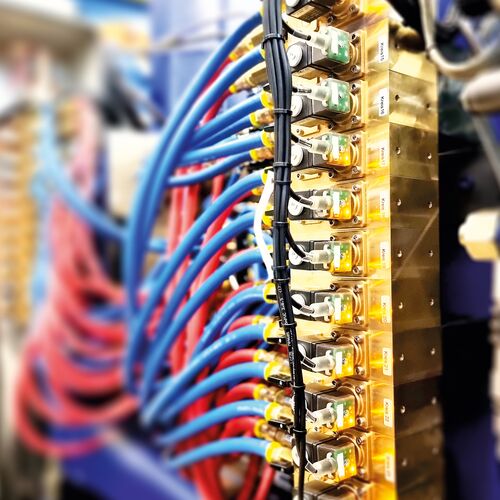
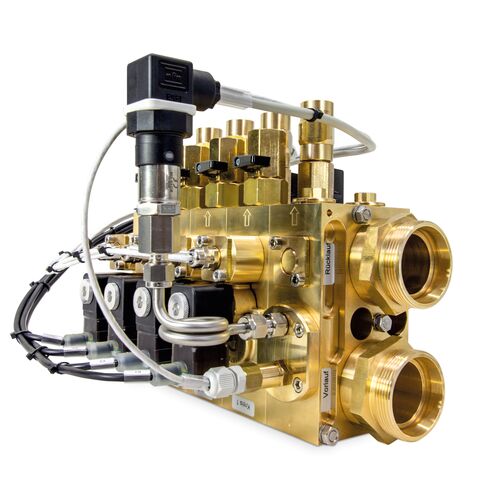
RHYTEMPER FlexControl individually controls each cooling circuit of the injection mould and adjusts heat removal to the actual demand during each cycle. Continuous monitoring of temperature and flow rate creates a transparent reference process, allowing thermal deviations to be detected at an early stage.
Thermal imbalances between individual areas of the mould are actively compensated for. Consistent heat removal in each cycle supports reproducible dimensional accuracy and can reduce warpage – even with complex moulds. At the same time, demand-based heat removal can shorten the cooling phase and thus reduce the cycle time.
Significant flow deviations, for example due to hose ruptures, blocked cooling channels or loosened deposits, are detected immediately. In critical conditions, the system can issue alarms or trigger a machine stop. This helps protect the mould, reduce unnecessary scrap and support stable series production.
Flexible Integration – Including Existing Machines
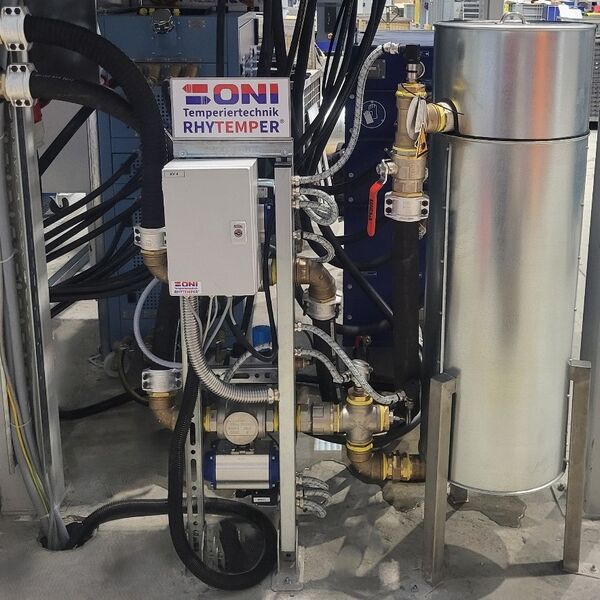
RHYTEMPER FlexControl can be integrated into new production systems as well as used to optimise existing injection moulding machines. Thanks to its modular design, the system can be adapted to the required number of temperature control circuits and the respective application.
Optimisation potential can also be utilised without conformal cooling or extensive modifications to the injection mould. The central RHYTEMPER control system enables relevant process values to be monitored, limits to be defined and mould data sets to be managed.
Central Monitoring and Control of Process Data
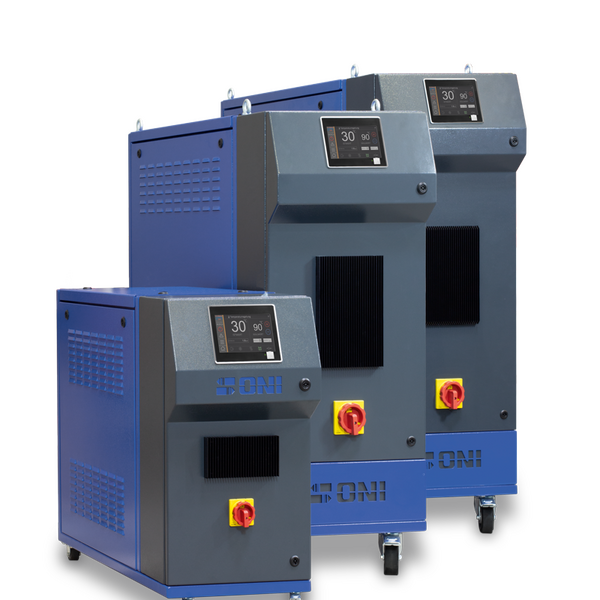
The RHYTEMPER control system provides a clear overview of the relevant temperature and flow rate values and enables direct access to the individual temperature control circuits. Individual limit and tolerance ranges support the early detection of process deviations.
Mould data sets enable stored settings to be restored reproducibly. The 15.6" panel also provides functions such as the integration of mould cooling plans, individual circuit labelling and leakage monitoring, as well as optional thermographic monitoring and remote maintenance access.